



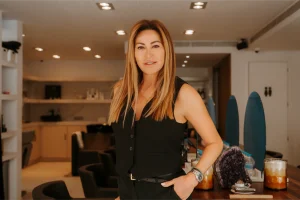
Balayage is a hair colouring technique designed to illuminate the hair naturally, creating soft transitions and a personalised luminous effect. To choose the right balayage in Ibiza, it is important to consider your base colour, hair condition, desired maintenance level and the final result you want to achieve.
Not all balayage results are the same. Although it is one of the most requested colour techniques, the outcome depends on several factors: natural hair colour, previous colour history, porosity, level of lift, chosen tone and aftercare.
That is why, before making a colour change, it is worth understanding what this technique involves and why it should be approached professionally and personally.
What is balayage and why is it still one of the most requested colour techniques?
Balayage is a colouring technique that creates a soft, luminous and natural-looking gradient in the hair. Unlike more uniform techniques, it allows light to be placed strategically, adding dimension and movement without creating a harsh root line.
Its main appeal is its versatility. It can be very subtle, simply brightening the face, or more visible if the aim is a more luminous colour change. It can also be adapted to blonde, honey, caramel, beige, bronde or light brunette tones, depending on the base colour and desired result.
Balayage is not simply about lightening the hair. Its purpose is to design a colour result that brings light, dimension and naturalness to each person’s overall image.
This is why it remains such a popular technique: it can create an elegant, flattering result that blends more naturally with hair growth.
Balayage is not the same as traditional highlights
Although many people use the terms interchangeably, balayage and traditional highlights are not exactly the same.
Traditional highlights usually have a more uniform distribution and can create a stronger contrast from the root. Balayage, on the other hand, aims for a softer transition, with a more blended and natural-looking effect.
This does not mean balayage is always the better option. The right technique depends on the hair, the desired result and the level of maintenance the client is willing to commit to. In some cases, traditional highlights may be more suitable; in others, balayage allows for a more integrated and less rigid finish.
The key is not to choose the technique simply because it is on trend, but because it suits the diagnosis. A good colour service should assess what the hair needs and what result best fits each client’s image.
What to consider before booking balayage in Ibiza
Before having balayage, there are several factors to consider. The first is your base hair colour. Working on naturally blonde hair is not the same as working on dark brunette hair, previously coloured hair or a colour-treated and lightened length.
Your colour history is also important. If the hair already has colour, old highlights or areas with different levels of porosity, the final result can vary. In these cases, a professional consultation is essential to avoid unwanted tones or unnecessary damage to the hair fibre.
Another important factor is the desired result. Some clients want a very natural balayage that is barely noticeable, while others are looking for a more luminous effect or a more visible colour change. Both options can work, but they require different approaches.
Lifestyle should also be considered. In Ibiza, the sun, sea salt, pool chlorine and frequent outdoor exposure can affect both colour and hair condition. If you spend a lot of time at the beach, travel often or want a low-maintenance result, this should be taken into account before choosing the tone and level of lift.
Before having balayage, it is important to consider both the aesthetic result and the real condition of the hair.
How to choose a natural and luminous balayage
A natural, luminous balayage should blend with the base colour, skin tone and personal style of each client. It is not just about going lighter; it is about finding a combination that flatters and remains beautiful over time.
Honey, caramel, beige and bronde tones can work very well when the goal is an elegant and natural result. On darker hair, tones that are too cool or too light can create an artificial contrast if they are not carefully planned. On blonde hair, toning is essential to avoid a result that looks too yellow or dull.
A good balayage should add light without losing coherence. The aim is not for the colour to look placed on top of the hair, but for it to feel integrated, flattering and aligned with the person’s image.
This is why the consultation is so important. It allows the stylist to define the intensity of the change, the most suitable tone and the maintenance the result will require.
The best balayage is not the lightest one, but the one that blends best with each client’s hair and personal image.
Balayage according to your hair type
The same balayage will not work in the same way on every head of hair. The technique must be adapted to the base colour, colour history and condition of the hair fibre.
Balayage on brunette hair
On brunette hair, balayage can add light without losing naturalness. Caramel, honey, hazelnut or bronde tones often blend well when the aim is a sophisticated and easy-to-maintain result.
With this type of hair, it is not always necessary to lift the colour too much. Sometimes, strategic lightness around the face and through the mid-lengths and ends is enough to add movement and freshness.
Balayage on dark hair
Balayage on dark hair requires particular care. If the hair is lifted too much or the wrong tone is chosen, the result can look artificial or develop unwanted warmth.
In these cases, a gradual approach is often recommended. Warm, neutral or caramel tones can help achieve a more natural effect. It is also essential to assess the condition of the hair before any lightening process.
Not all dark hair is ready for a very light result in a single session. Forcing the process can compromise the quality of the hair fibre.
Balayage on blonde hair
On blonde hair, balayage can add dimension, soft contrast and luminosity. It can also help break up a colour that looks too flat, creating more visual movement through the hair.
Here, toning plays an important role. A well-finished blonde should remain clean, luminous and balanced. If the tone becomes too yellow, dull or uneven, maintenance in the salon may be needed.
Balayage on coloured or previously lightened hair
When the hair is already coloured or lightened, a prior consultation is essential. There may be colour build-up, more porous areas, weakened ends or uneven tones that affect the final result.
In some cases, further lightening may not be advisable in the first session. It may be better to prepare the hair with treatments, correct the colour gradually or design a safer colour strategy.
A well-executed balayage must take into account the real starting point of the hair, not only the reference image the client wants to achieve.
How much maintenance does balayage need?
One of the advantages of balayage is that it usually requires less maintenance than colour applied from the root. Because the transition is softer and more blended, hair growth can look more natural and less noticeable.
However, this does not mean it requires no care. Colour needs maintenance to preserve shine, luminosity and balance. Depending on the chosen tone, a toner may be needed from time to time to prevent the colour from oxidising, becoming dull or changing reflection.
The hair fibre must also be cared for. If balayage involves lightening, the hair may need hydration, nutrition or repair, depending on its condition. This is especially important in summer, when the sun, sea salt and chlorine can affect both colour and texture.
A well-done balayage can be easy to maintain, but it still needs the right care to preserve shine and luminosity.
How to care for balayage after your appointment
Aftercare is key to keeping balayage beautiful for longer. A good result does not end in the salon; it also depends on the routine followed afterwards.
It is advisable to use products designed for colour-treated hair, avoid harsh washing and protect the hair from the sun, salt and chlorine. This is especially important in Ibiza, where exposure to the sea, swimming pools and sun can be frequent for much of the year.
It is also useful to apply masks or hydrating treatments according to the needs of the hair. If the hair feels dry, porous or lacks shine, professional treatments may help reinforce the care routine.
Reducing excessive use of straighteners, curling tools or high-temperature blow-drying also helps maintain hair quality. When heat tools are used, proper heat protection is important.
When the tone starts to lose brightness, becomes warmer than desired or the hair feels rougher, it is worth returning to the salon to assess whether toner, hydration or repair is needed.
Why a professional consultation is essential before balayage
A professional consultation makes it possible to assess the base colour, previous colour history, hair strength and whether the desired result is realistic.
Often, the reference image a client brings cannot be achieved exactly in one session, or it may not be the best option for the current condition of the hair. In these cases, professional judgement helps define a more realistic, flattering and safer alternative.
The consultation also helps determine the level of lift, tone, application technique and aftercare required. It also helps avoid unnecessary damage and allows the client to understand what maintenance will be needed afterwards.
At Laura Furné Beauty Salon, every colour service begins with a personalised consultation. The aim is to design a result that works with the client’s hair, style and overall image, always prioritising a natural, refined and high-quality finish.
Not all hair is ready for the same level of lightening; this is why a professional consultation is essential.
Balayage in Ibiza: when to book an appointment at the salon
It may be the right time to book balayage in Ibiza if you want to illuminate your hair naturally, soften a previous colour or make a change without choosing a result that feels too dramatic.
It can also be a good option if your hair looks dull and you want to bring more light to the face, or if you are looking for a colour that grows out in a more blended way than root-to-end colouring.
Before a special stay, an event, the summer season or an important occasion, balayage can help refresh your image with an elegant and luminous finish. However, it is best to plan ahead, especially if the hair needs preparation, toning or complementary treatments.
If you are looking for a hair salon in Ibiza for a personalised colour change, at Laura Furné Beauty Salon every service begins with a consultation to define the most suitable tone, technique and maintenance plan.
Laura Furné: professional judgement behind every colour change
A colour change should not be treated in isolation. Hair is part of a complete image: style, personality, skin tone, lifestyle and maintenance expectations.
The professional experience of Laura Furné brings both technical and aesthetic judgement to each colour proposal. Her approach combines trend awareness, technique and personalisation to create results that feel coherent, flattering and aligned with each client.
This judgement is especially important in services such as balayage, where naturalness depends on small details: the colour transition, tone selection, placement of light and aftercare.
Frequently asked questions about balayage in Ibiza
What is balayage?
Balayage is a colouring technique that creates a soft, natural-looking gradient in the hair, adding light and dimension without the harsh root line often associated with other highlighting techniques.
What is the difference between balayage and highlights?
Traditional highlights usually have a more uniform distribution, while balayage aims for a more blended, natural and personalised effect. The right choice depends on the desired result and the type of hair.
Does balayage work on dark hair?
Yes, but it requires a prior consultation. On dark hair, it is important to choose the right level of lift and tone to avoid artificial results or unwanted warmth.
How long does balayage last?
It depends on the type of hair, the chosen tone and the aftercare. Because the root is more blended, balayage usually requires less maintenance than colour applied from the root, although toner and treatments may be needed to preserve shine.
Does balayage damage the hair?
Balayage can involve lightening, so it should be carried out with professional judgement. A good consultation helps assess the condition of the hair and define how much lightening is advisable.
How should I care for balayage in summer?
It is advisable to protect the hair from the sun, sea salt and chlorine, use products designed for colour-treated hair, keep the hair hydrated and return to the salon if the tone loses brightness.
Which balayage tone will suit me best?
It depends on your base colour, skin tone, personal style and the result you want to achieve. A professional consultation helps define tones that look more natural, luminous and coherent with your image.
Where can I get balayage in Ibiza?
At Laura Furné Beauty Salon, we offer colour and balayage services in Ibiza with a personalised approach, assessing the condition of the hair, base colour and desired result before carrying out the service.